What makes a space welcoming? How do we experience space as welcoming instead of hostile or simply indifferent?
Maurice Merleau-Ponty observes that our bodies trail behind our actions in our daily lives. I am involved in an activity, for example, walking my dog. Usually, I do not notice my body and each of its movements during the walk. Instead, I direct my attention towards the world around me, including my dog, who is constantly looking for something to pick up from the ground and eat before I notice.
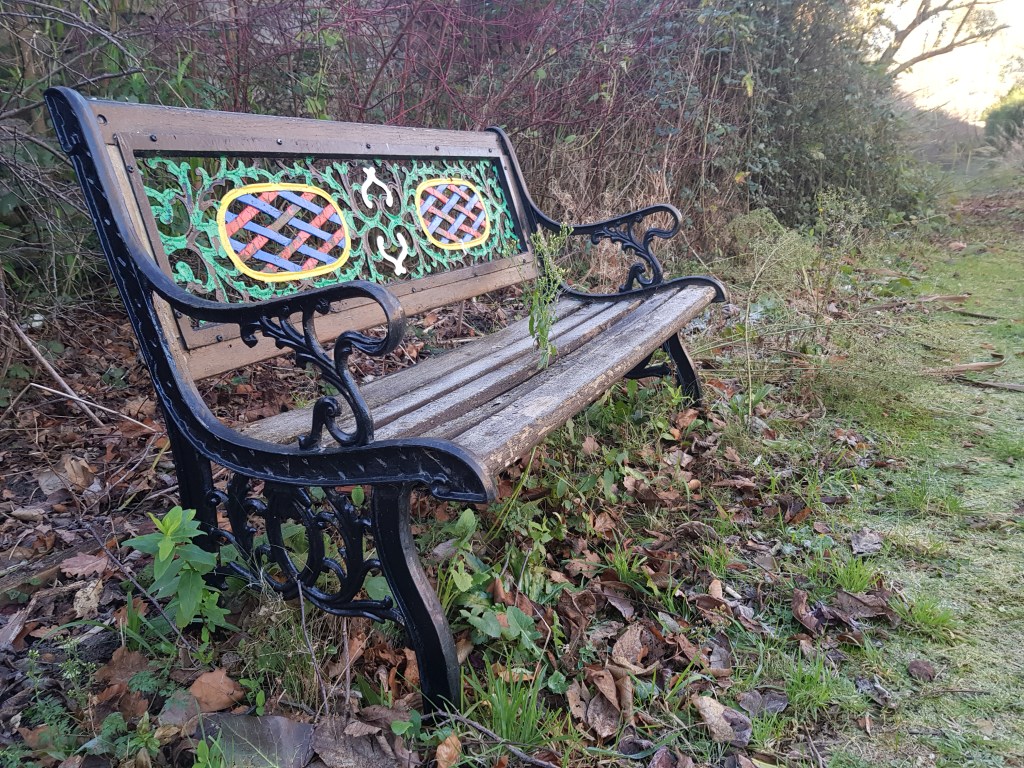
Expanding on Merleau-Ponty’s concept, Sara Ahmed suggests that when a space fails to welcome me, my attention is abruptly redirected towards myself, away from my engagement with the world. Suddenly, my body is no longer a silent companion but a demanding presence. Returning to my earlier example, if I grow weary during the walk and in need of a respite, I scan the surroundings for a bench to rest and recover. If there is none, my exhausted body becomes the centre of my attention. Such a space is now perceived as unwelcoming. What was once a pleasant environment for a walk now feels indifferent or even hostile, as if proclaiming, ‘tired bodies are not welcome here!’
This may seem like an unusual way to think about space, but it is revealing. While both Merleau-Ponty and Ahmed emphasise that space is not experienced as a mere container within which we move among others and various things, Ahmed goes a step further. She points out that “spaces acquire the shape of the bodies that “inhabit” them”*. In fact, it is a circle: some bodies expand into and inhabit a space more than others, which shapes this space, the sort of ‘skin’ it acquires, and that, in turn, influences which bodies feel welcome in this space and can inhabit it seamlessly while other bodies either avoid such spaces or try to adjust their skin to its.
Thankfully, both people and spaces are capable of change. If the space where I go on walks with my dog does not welcome tired bodies, I can attend to this, draw others’ attention to it and eventually, we can change the ‘shape’ of this space by ensuring that it allows tired bodies to expand into it as well. We add benches.
keep exploring!
P.S. Thank you for visiting me here on the humanfactor.blog! If you enjoyed this post and are interested in more philosophical content, I invite you to explore the blog, leave a comment, like, and subscribe to get notified of new posts.
*Sara Ahmed “Queer Phenomenology: Orientations, Objects, Others” (2006)
 humanfactor
One thought on “Welcoming Spaces”