What are the risks of a failed imagination? And what does it mean for the imagination to fail? What conditions foster imagination, and in what environment does imagination wither?
Philosophers have engaged with the question of imagination for thousands of years, often placing it as a structure somewhere between bodily sensations and intellectual thought. If you are interested in a historical journey through some of these philosophical ideas, you can read this post on the role of Imagination in the Middle Ages and during the Enlightenment.
In our time, philosophers pay even closer attention to the imagination matters in the unfolding of our lived experiences. Richard Kearney provokes our ethically-socially attuned imagination when he suggests in his book On Stories (2002) that “genocides and atrocities presuppose a radical failure of narrative imagination.” And here is what the writer and Chicana cultural theory, feminist and queer theory scholar Gloria E. Anzaldúa wrote in her book Borderlands/La Frontera: The New Mestiza (1987):
The struggle has always been inner, and is played out in outer terrains. Awareness of our situation must come before inner changes, which in turn come before changes in society. Nothing happens in the ‘real’ world unless it first happens in the images in our heads.
Gloria Anzaldúa
keep exploring!
P.S. Thank you for visiting me here on the humanfactor.blog! If you enjoyed this post and are interested in more philosophical content, I invite you to explore the blog, leave a comment, like, and subscribe to get notified of new posts.
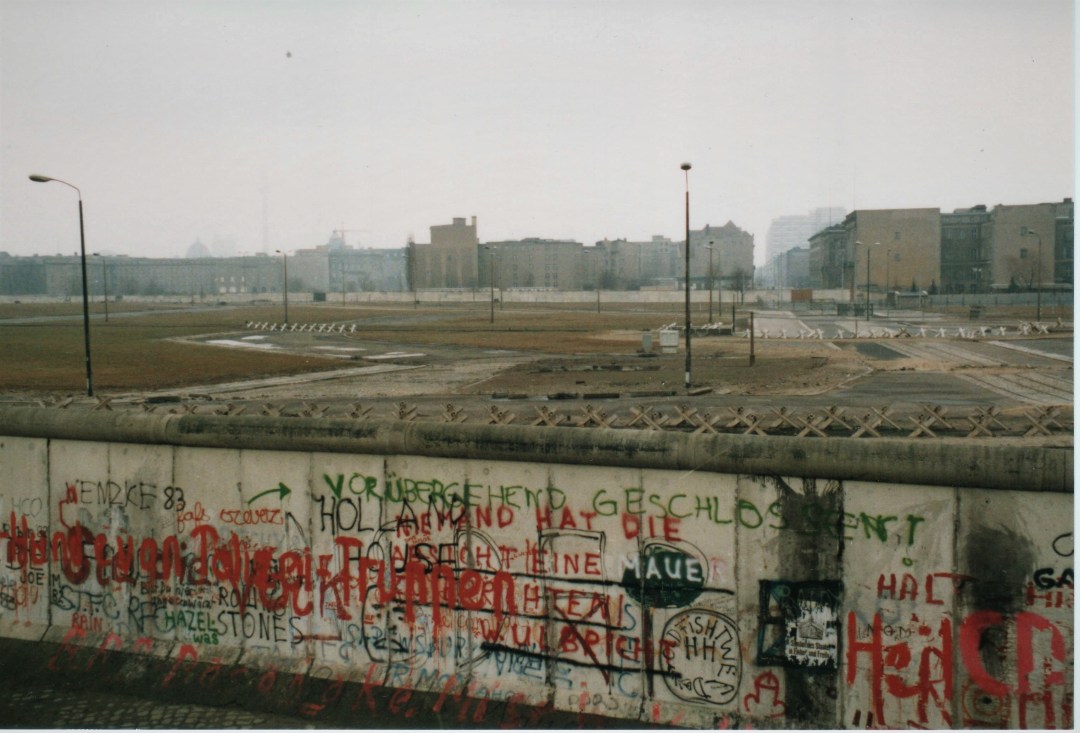
Featured Image credit: “Blick von Westen über die Berliner Mauer. Scan eines Fotos aus eigenem Besitz, aufgenommen im April 1983.” (my translation) View from the West over the Berlin Wall. Scan of a photo from a private archive. Taken in April 1983. By Siegbert Brey – Own work, CC BY-SA 4.0, https://commons.wikimedia.org/w/index.php?curid=75463616
 humanfactor