In the traditional Japanese art of arranging flowers – ikebana, “living flowers”, or kado, “the way of flowers” – special attention is paid to the so-called negative space. How can a gap, an empty space be important, valuable, and even beautiful?
With its history of more than 1,500 years, ikebana, unlike Western flower arrangement practices, emphasises the beauty of gaps, the unfilled space, which is an essential part of the entire composition. This applies not only to the specific arrangement of flowers but also to the way it is placed in a space.
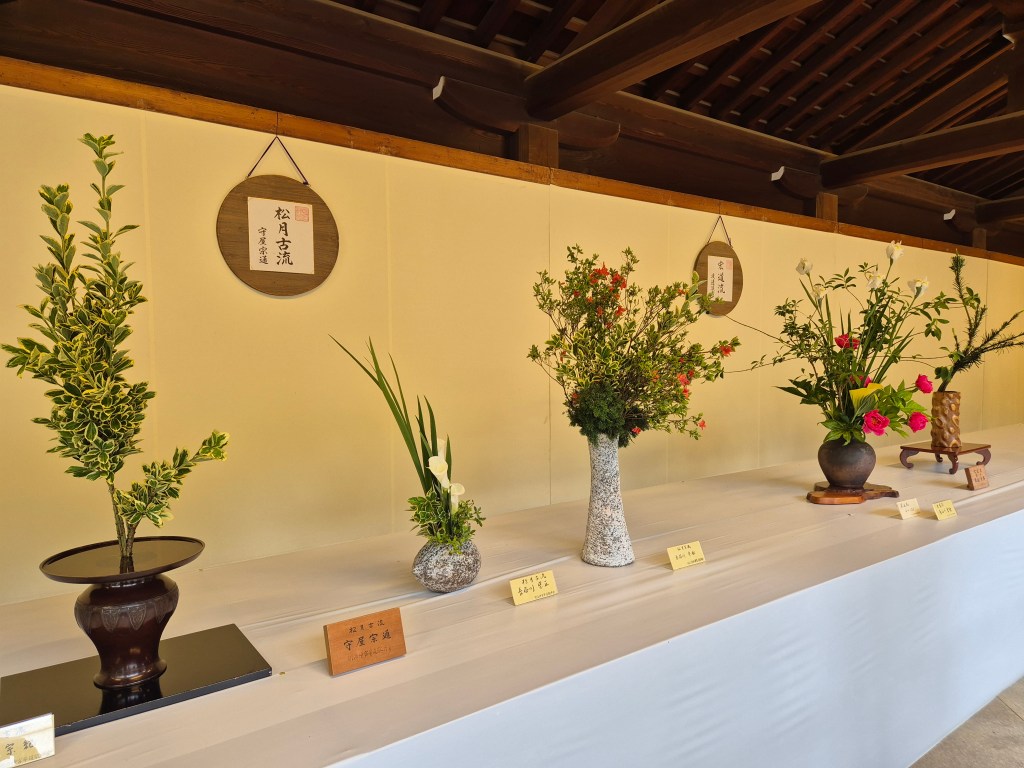
You are much more likely to notice a single branch in a vase in an otherwise empty room and appreciate how it transforms the ’emptiness’ of that space into beauty in its own right. Perhaps for this reason, traditional Japanese homes are usually sparsely furnished – to highlight the importance and beauty of free space, without the urge to fill it with ‘something’.
keep exploring!
P.S. Thank you for visiting me here on the humanfactor.blog! If you enjoyed this post and are interested in more philosophical content, I invite you to explore the blog, leave a comment, like, and subscribe to get notified of new posts.
*Image credit: my photo, an exhibition of Ikebana schools’ artworks in Tokyo.
 humanfactor